
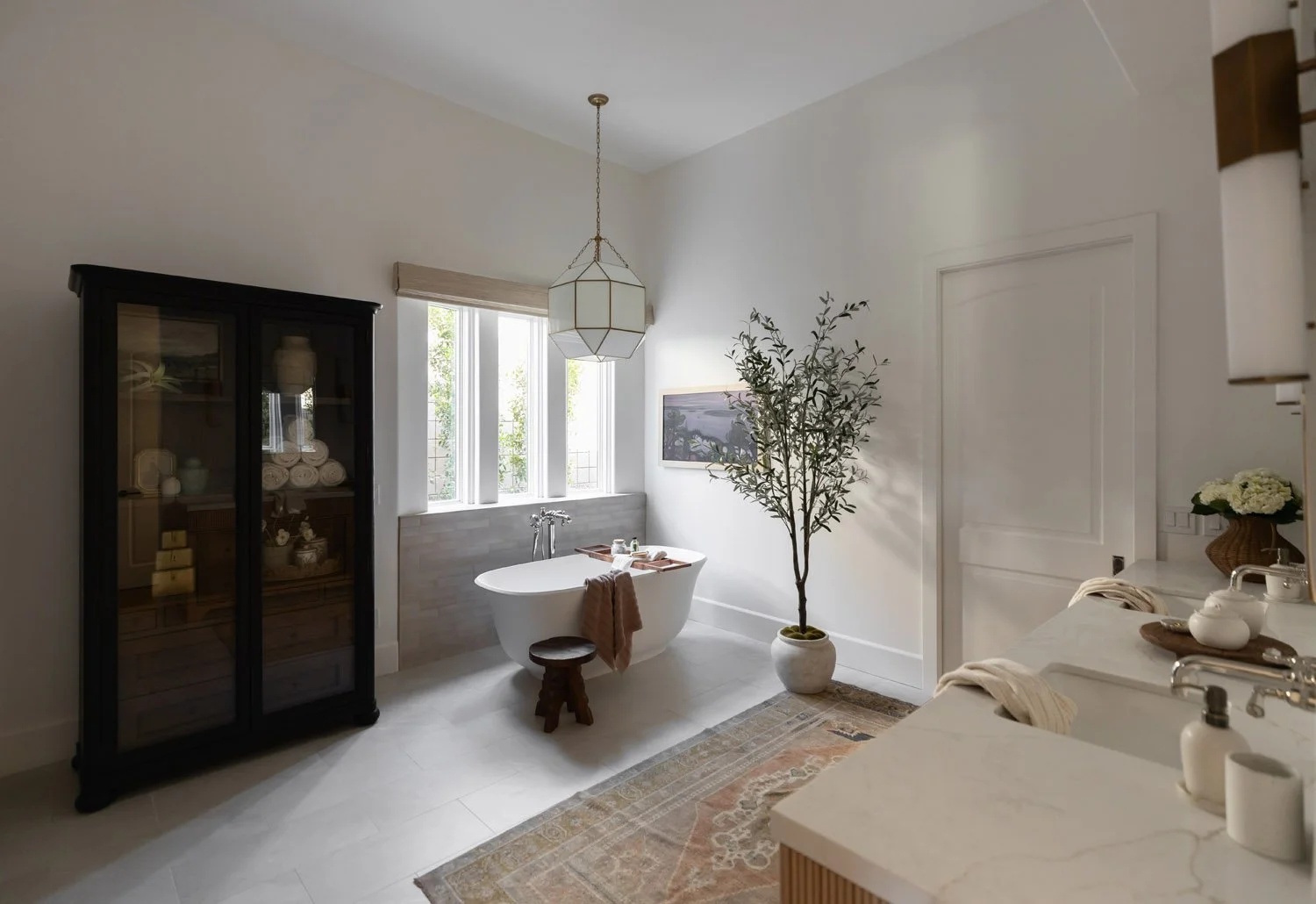
Building a custom home comes with an enormous amount of choice.
At first, that can feel exciting. You finally get to choose the flooring, cabinetry, countertops, tile, plumbing fixtures, lighting, hardware and all the other details that will make the house feel like yours.
Then the decisions start coming quickly, and it becomes very easy to lose sight of how they all relate to one another.
The key to selecting finishes for a custom home isn’t finding the most beautiful option in every category. It’s developing a clear direction for the home first, then making each selection within that bigger picture.
Here’s how I approach it.
Start with the overall direction before choosing individual finishes
Before selecting a single tile or countertop, establish how you want the home to feel as a whole.
Think about the architecture, the natural light, the surrounding landscape and the atmosphere you want to create. Do you want the home to feel warm and layered? Light and quiet? More contemporary, or influenced by traditional materials and details?
That broader direction becomes the filter for everything that follows.
For us, this happens during the conceptual and developmental design phases. We first establish the overall vision for the home and then refine the layouts, materials, fixtures and finishes in much greater detail.
Without that framework, it’s surprisingly easy to end up with a collection of finishes you love individually but that don’t quite belong in the same house.
Select finishes in the right order
Not every decision carries the same weight.
Some materials cover a large amount of visual space or affect other selections, so it makes sense to establish those first.
For example, flooring often runs through several rooms and immediately influences the warmth and tone of everything around it. Cabinetry and countertops have a similar effect in kitchens and bathrooms.
Once those foundational selections are established, smaller details such as backsplash tile, plumbing fixtures and hardware can be chosen in response to them.
The exact sequence will vary by project, but I generally prefer moving from the larger, more permanent decisions toward the smaller finishing details rather than starting with whatever happens to catch your eye first.


Look at materials together, not one at a time
A finish can look completely different once it’s sitting beside the other materials in the room.
That warm white stone sample may suddenly read cool next to the cabinetry. A tile that looked subtle on its own may become much busier once it covers an entire wall. Two metals you liked individually may compete when they’re used side by side.
During developmental design, we bring samples together so we can evaluate the palette as a whole.
That means looking at how the flooring works with the cabinetry, how the countertop relates to the backsplash, and how those materials connect to the rooms around them.
This is also why I’m wary of choosing too much from individual inspiration images. You’re usually seeing a finish within an entire designed environment, not in isolation.
Think beyond one room
In a custom home, every room doesn’t need to use the same materials.
But there should be enough continuity that moving through the house feels natural.
That might mean carrying the same flooring through several spaces, repeating a particular stone or wood tone, or using related materials in slightly different ways throughout the home.
Bathrooms are a good example. I actually like each bathroom to feel different and have its own personality. The connection doesn’t need to come from repeating the same tile, color palette or metal finishes. Instead, the spaces should feel like they belong to the same overall design story. They might share a similar level of warmth, architectural detail or materiality, even when the individual selections are completely different.
Let the architecture guide some of the decisions
Finish selections shouldn’t fight the architecture.
Ceiling heights, window placement, natural light, room proportions and the overall architectural style can all influence which materials make sense.
In Scottsdale, Arcadia and Paradise Valley, we also think about how materials interact with strong natural light and the surrounding desert landscape.
A material that looks beautiful under showroom lighting can feel completely different once it’s installed in a sun-filled room, so whenever possible, samples should be reviewed in the actual space and at different times of day.

Balance visual interest with restraint
When you’re presented with hundreds of beautiful materials, it’s easy to want every surface to do something interesting.
Usually, the better result comes from choosing where you want the eye to go.
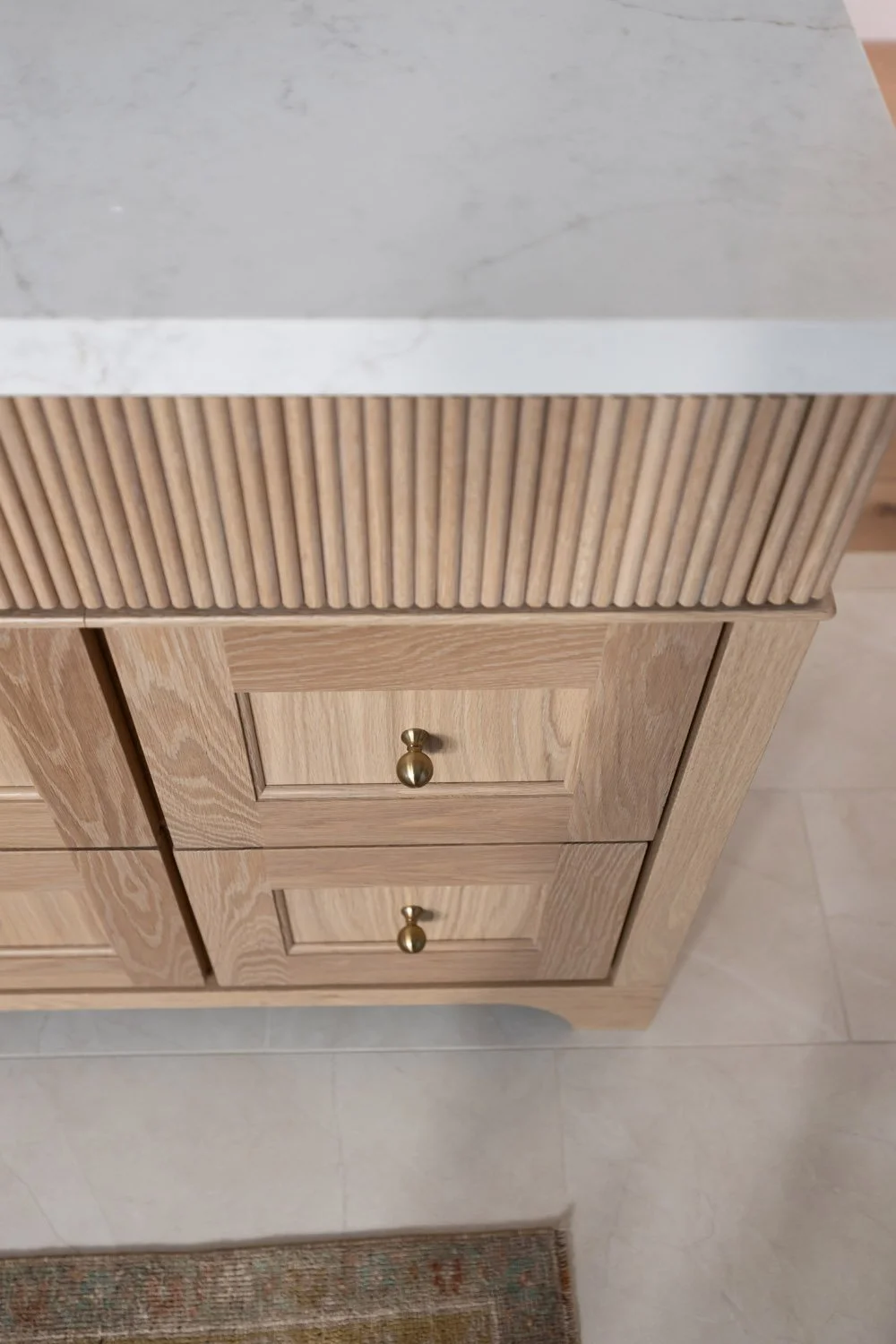
If the stone has a lot of movement, the cabinetry or backsplash may need to be quieter. If a bathroom features a distinctive tile, every other surface doesn’t also need to become a focal point.
I like to think in terms of hierarchy: decide which material or detail deserves attention, then let the surrounding selections support it.
That restraint also tends to give a home more longevity than following several strong trends at once.
Consider maintenance as well as appearance
A custom home still needs to work for real life.
Before specifying a finish, consider how the room will actually be used and what level of maintenance you’re comfortable with.
Some natural stones develop a patina over time. Certain surfaces show fingerprints or water marks more easily than others. A delicate material may be perfectly appropriate in a powder room but frustrating in a hardworking kitchen.
There isn’t one universally “best” material. The right choice depends on where it’s being used and what you expect from it.
Part of good design is balancing the look you want with how you genuinely want to live.
Make decisions early enough to keep the project moving
Finish selections aren’t only aesthetic decisions. They’re also tied to the construction schedule.
Contractors and trades need information at specific stages of the build, and many items have long lead times.
Cabinetry may need appliance specifications before drawings can be finalized. Plumbing rough-ins depend on fixture selections. Lighting and electrical plans need to be resolved before walls are closed.
This is one of the reasons I recommend involving your interior designer early in a custom build. In When to Hire an Interior Designer for New Construction Homes in Scottsdale, I explain which decisions can be influenced at different stages and why waiting until the “finishes stage” can limit your options.
Your designer will also be working closely with the professionals responsible for executing those selections. Our article on How Interior Designers Work With Builders explains more about how that collaboration works throughout a project.


Create a clear record of every selection
Once finishes are approved, they need to be documented clearly.
On our Full-Service new-build and renovation projects, the Developmental Design phase results in a detailed record of the materials and finishes selected for the home, which becomes a roadmap during purchasing and construction.
This helps everyone work from the same information and reduces the likelihood of details being lost between conversations, emails, samples and site meetings.
When you’re dealing with an entire custom home, organization becomes every bit as important as taste.
Selecting finishes for a custom home in Scottsdale?
Choosing finishes should feel exciting, but the sheer number of decisions involved in a custom build can quickly become overwhelming without a clear plan.
For me, the goal is always to look beyond the individual sample and consider what it contributes to the home as a whole: how it works with the architecture, how it relates to the surrounding materials and how it will feel to live with every day.
Through our Full-Service Interior Design, we work alongside architects, contractors and trades on new builds and renovations, developing the design, selecting materials and finishes and documenting the details needed to carry that vision through construction.