
How to Furnish a Luxury Home in Arizona
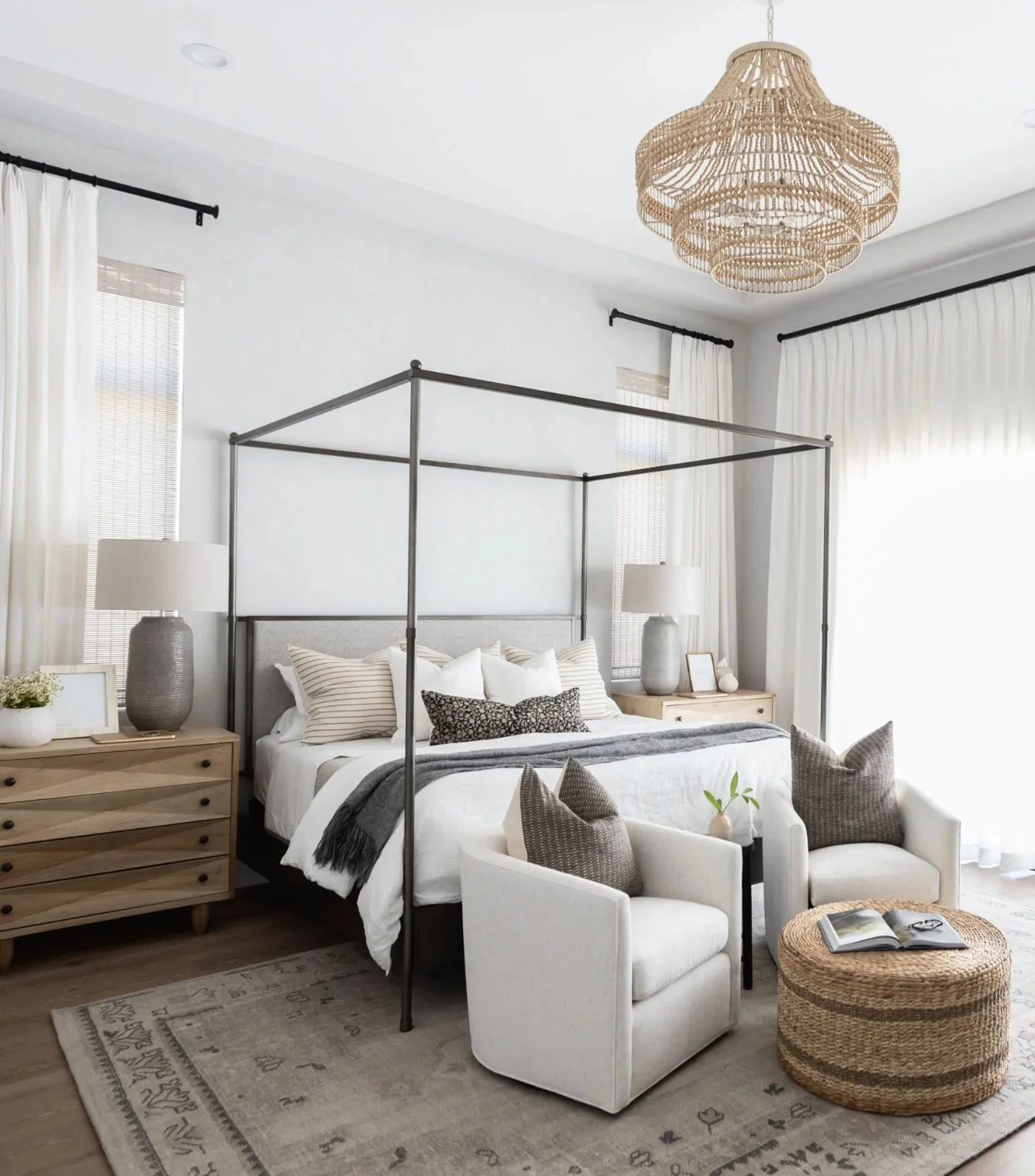
Furnishing a home can look deceptively simple from the outside. Find pieces you love, order them, and gradually fill each room.
In reality, choosing beautiful furniture is only one part of creating a home that feels finished. Scale, layout, materials, lighting, color, and the way one room relates to the next all have an impact on the end result.
This becomes especially noticeable in many Scottsdale and Paradise Valley homes, where generous room proportions, high ceilings, strong natural light, and open floor plans can make furniture that looked substantial in a showroom suddenly feel completely out of scale.
If you’re furnishing several rooms or starting with an almost blank slate, here are some of the things I recommend considering before you begin buying.
Start with the whole home
It’s tempting to tackle whichever room feels most urgent and work outward from there, but when you’re furnishing several spaces, it helps to establish the broader direction first.
That doesn’t mean every room needs the same palette or furniture style. I actually prefer homes where each room has a little character of its own.
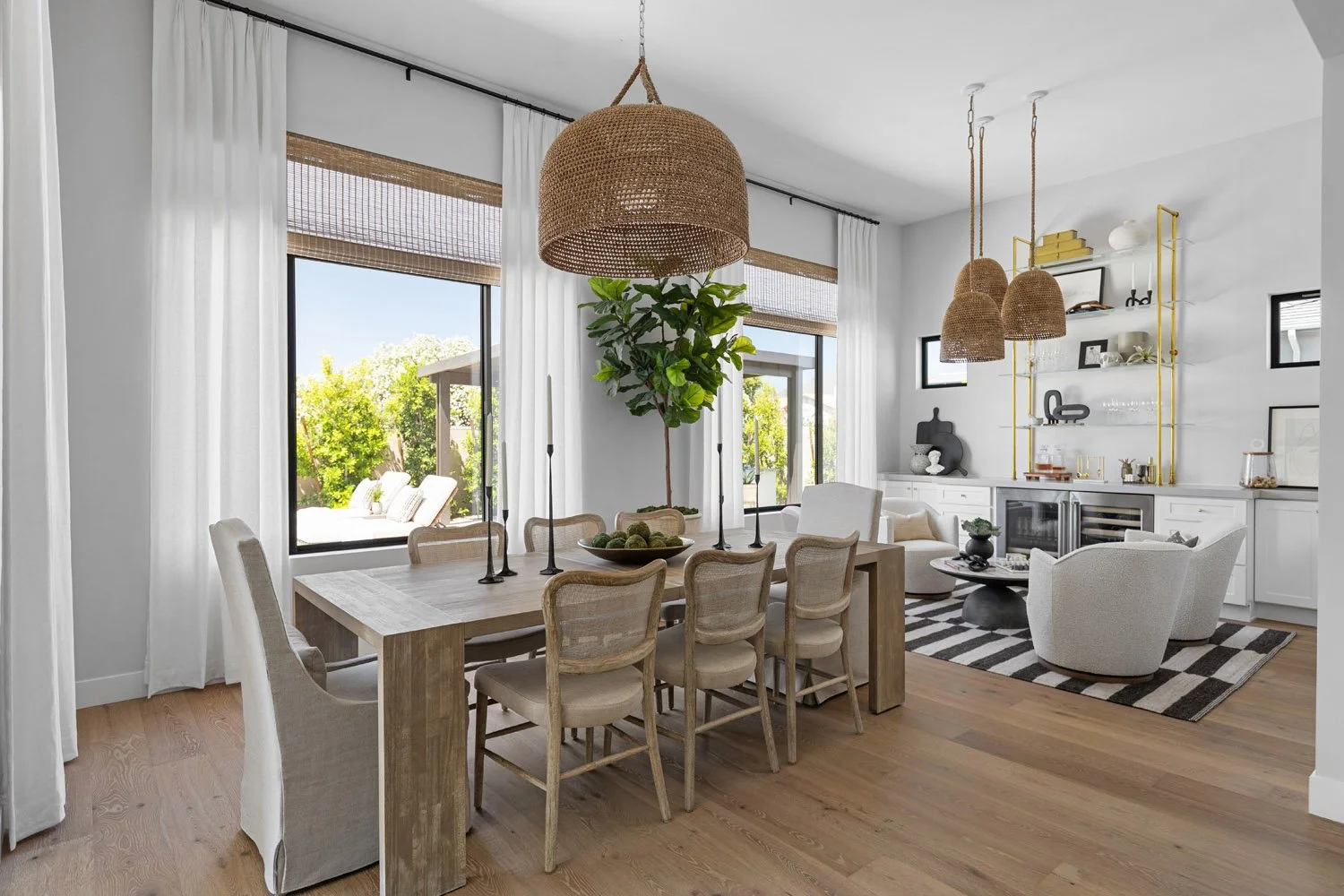
The cohesion comes from quieter connections between spaces. You might repeat a particular wood tone, carry similar metals through lighting and hardware, or use related colors and materials in different ways throughout the home.
Planning those relationships early makes it much easier for individual rooms to feel distinct without feeling disconnected.
Get the scale right before you start buying
Scale is one of the biggest challenges I see when furnishing larger Arizona homes.
A sofa that felt substantial in a showroom may look surprisingly small once it’s sitting in a great room with high ceilings and large expanses of glass. The same goes for rugs, artwork, lighting, and even occasional tables.
This is why we start with space planning rather than shopping.
A furniture layout helps establish how much seating a room actually needs, where the natural circulation paths are, and how large individual pieces need to be in relation to both the room and one another.
It can also reveal where custom furnishings make sense. Sometimes the proportions a space needs simply aren’t available in standard retail sizes.


Think about how you actually live
Before deciding what should go in a room, think about what actually happens there.
Do you entertain regularly? Does everyone inevitably gather around the kitchen? Do you have children, grandchildren, or pets using the space? Is this your primary residence or an Arizona home you return to throughout the year?
Those details influence everything from furniture layouts and storage to upholstery and the number of seats you actually need.
A fabric or finish can be beautiful and still be completely wrong for the people living with it every day.
For me, a well-designed home should feel elevated without becoming precious. You should still be able to sit down, put your feet up, invite people over, and actually enjoy it.
Choose materials that make sense for Arizona
Arizona’s climate and natural light deserve some consideration when furnishing a home.
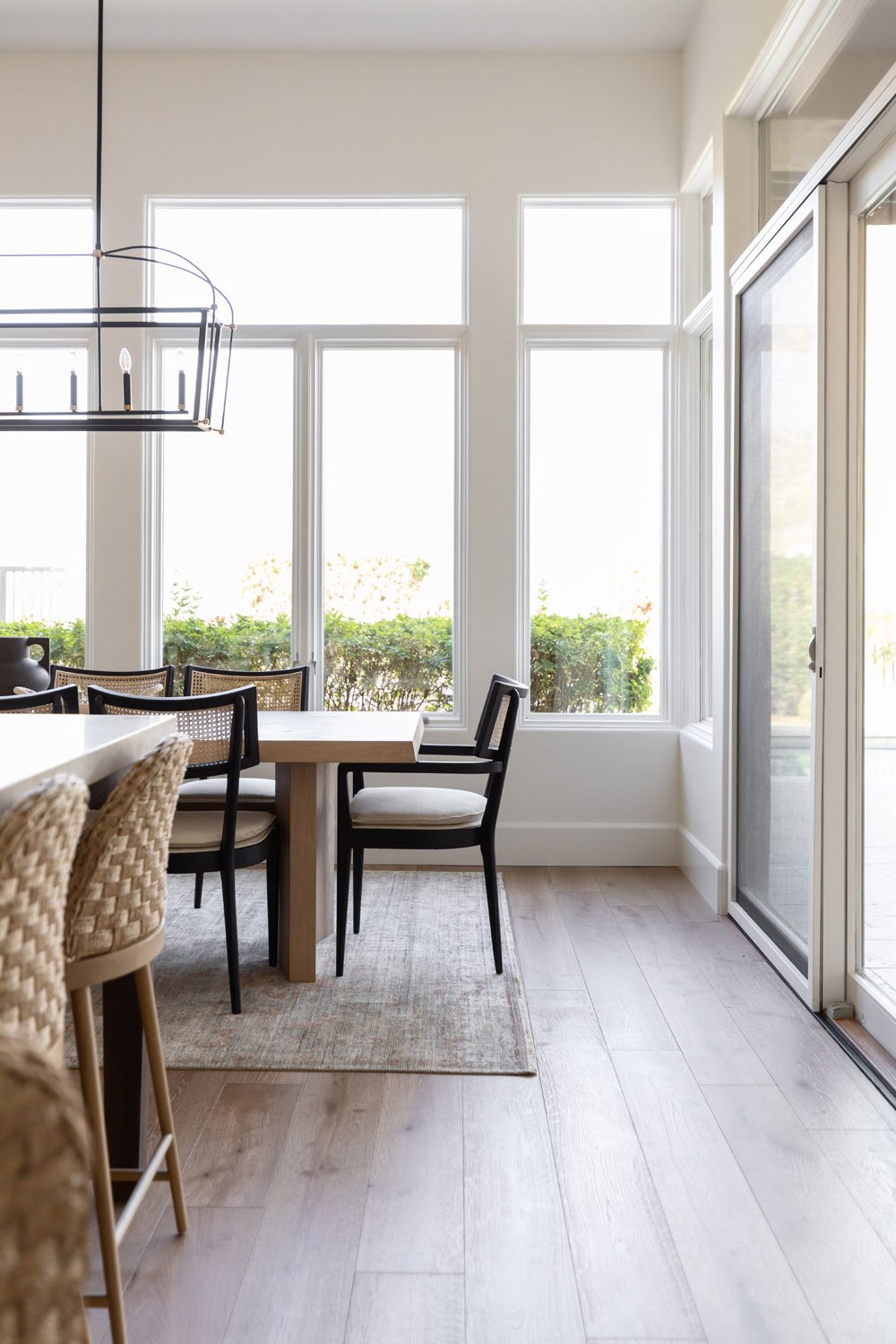
Large windows are one of the things that make many Scottsdale and Paradise Valley properties so beautiful, but constant direct sunlight can also be hard on certain fabrics, woods, and finishes over time.
Window treatments can help manage glare, privacy, and sun exposure, while thoughtful material choices make everyday living easier. Performance fabrics, durable natural materials, and finishes that age well can still look refined without requiring you to worry about every spill or footprint.
For homes designed around indoor-outdoor living, it’s also worth thinking about how frequently people move between the two and choosing materials accordingly.
Let some pieces lead and others support
One of the easiest ways to overwhelm a room is to make every piece compete for attention.
I’d rather choose a handful of elements that deserve to lead the space and allow the rest to support them.
That might mean investing in a beautifully made sofa, a custom dining table, original artwork, or a distinctive light fixture, then choosing quieter pieces around it.
It’s also why I generally avoid furnishing an entire room from a matching collection.
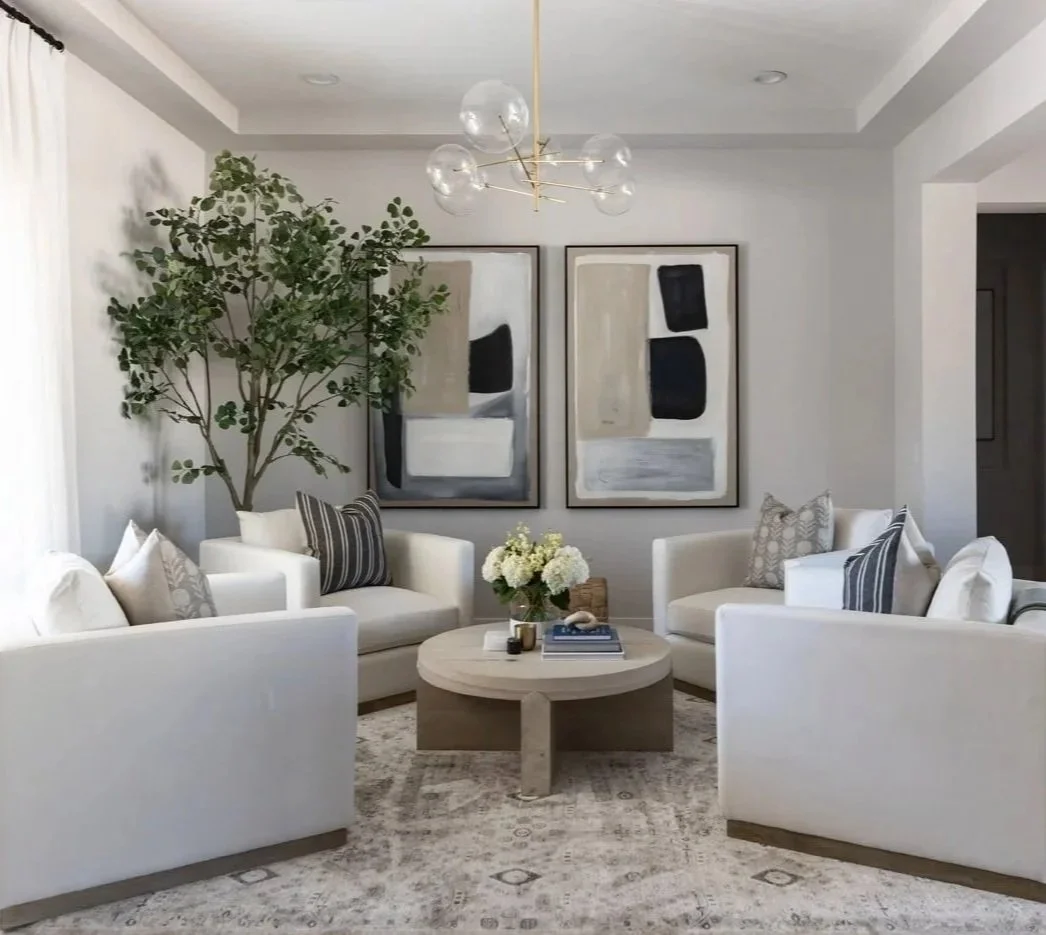
Mixing materials, silhouettes, textures, and even pieces from different periods can make a home feel far more personal and collected. The consistency comes from having a clear overall direction, rather than making everything match.
Make room for what you already love
Starting fresh doesn’t have to mean replacing everything.
Artwork you’ve collected, an antique chest, family pieces, books, or objects brought home from travels can often give a newly furnished space the personality it needs.
During our design process, we look at what already deserves a place in the finished home and design around those pieces where it makes sense.
They don’t necessarily need to perfectly match the new scheme. Sometimes the slight tension between old and new is exactly what keeps a room from feeling overly decorated.
Think about lighting as part of the furnishing plan
Even a room with plenty of overhead lighting can feel flat in the evening if that is the only light source.
Table lamps, floor lamps, decorative fixtures, picture lights, and other layers of lighting help create warmth and atmosphere once the Arizona sun goes down.
Lighting also needs to work with the furniture plan. A reading chair needs useful light nearby, a dining fixture needs to sit correctly over the table, and electrical locations may need to support the way the room will eventually be arranged.
Planning those elements together produces a much more resolved space than adding lamps wherever there happens to be an outlet later.
Plan the budget before the shopping begins
Having a realistic furnishing budget early gives you much more freedom to make good decisions.
It allows us to determine where custom pieces make sense, where ready-made options will work perfectly well, and which elements of the home deserve a larger share of the investment.
It also helps avoid the stop-start cycle that happens when individual pieces are selected without understanding what the overall home is likely to cost.
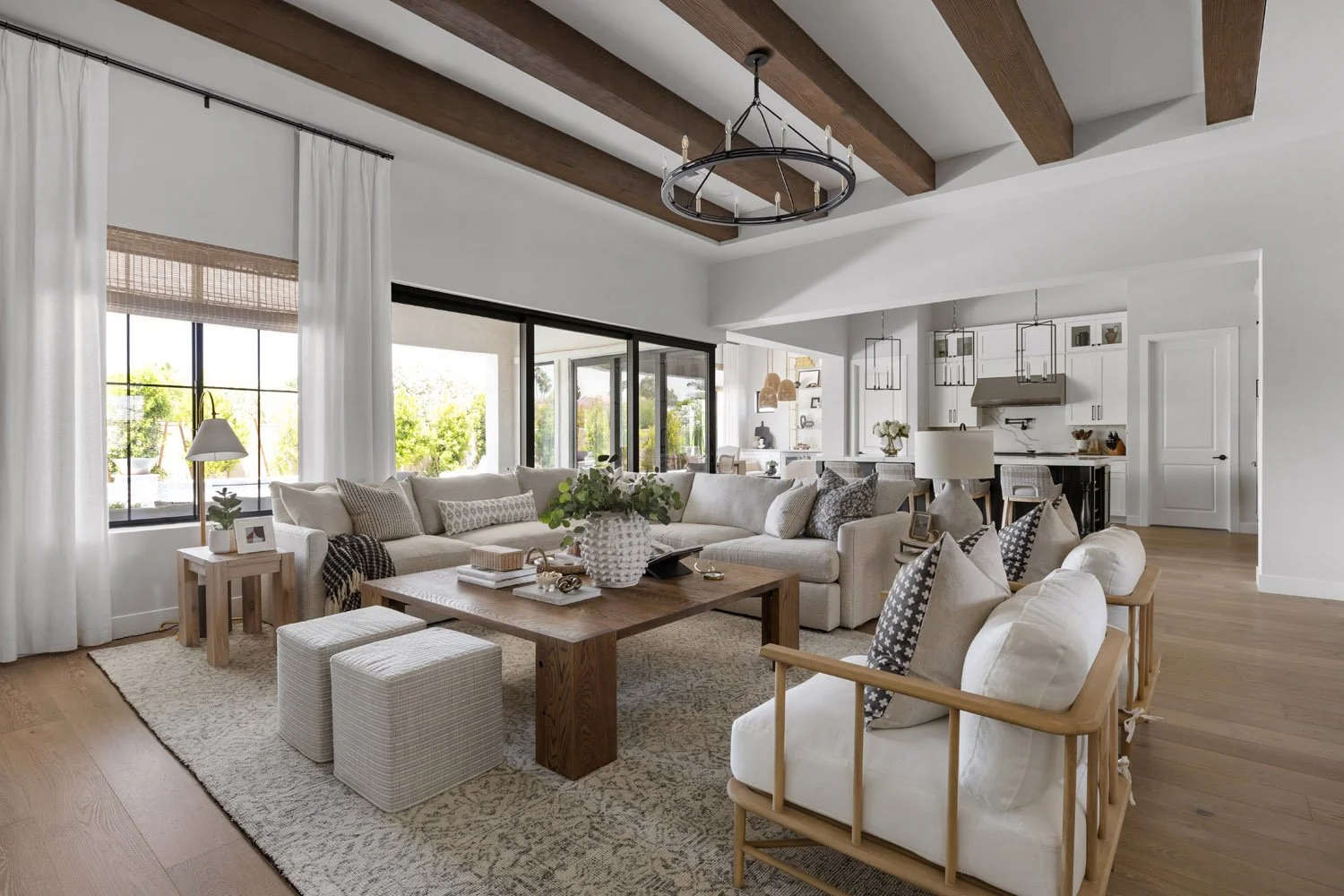
I’ve gone into the numbers in much more detail in The Real Cost of Furnishing a Home in Arizona, including the factors that affect furnishing budgets and why whole-home projects can vary so significantly.
Don’t forget what happens after everything is selected
Selecting the furniture is only part of furnishing a home.
On a whole-home project, there may be dozens of orders moving at different speeds, along with freight, receiving, inspections, storage, delivery, and installation to coordinate.
Through our Full-Service Interior Design, we handle sourcing and procurement as well as orders, shipments, receiving, and final installation, so clients aren’t managing each individual delivery themselves.
It’s a less glamorous side of furnishing a home, but an important one. A cohesive design needs an equally considered plan for actually getting everything into the house.
Furnishing a home in Scottsdale or Paradise Valley?
I believe the best luxury interiors feel comfortable, layered, and personal to the people living in them. They don’t need to be overly coordinated or filled with statement pieces in every corner.
A clear plan makes it much easier to make thoughtful decisions about where to invest, what to keep, and how each room should relate to the rest of the home.
At Maya Axt Interiors, our Full-Service Interior Design includes whole-home furnishings and styling for clients throughout Scottsdale, Paradise Valley, Phoenix, and the surrounding areas. We take projects from the initial design concept through sourcing, procurement, installation, and final styling.
If you’re preparing to furnish several rooms or an entire Arizona home, tell us about your project.