
How to Design a Primary Bathroom That Actually Feels Like a Spa (Not Just Looks Like One)
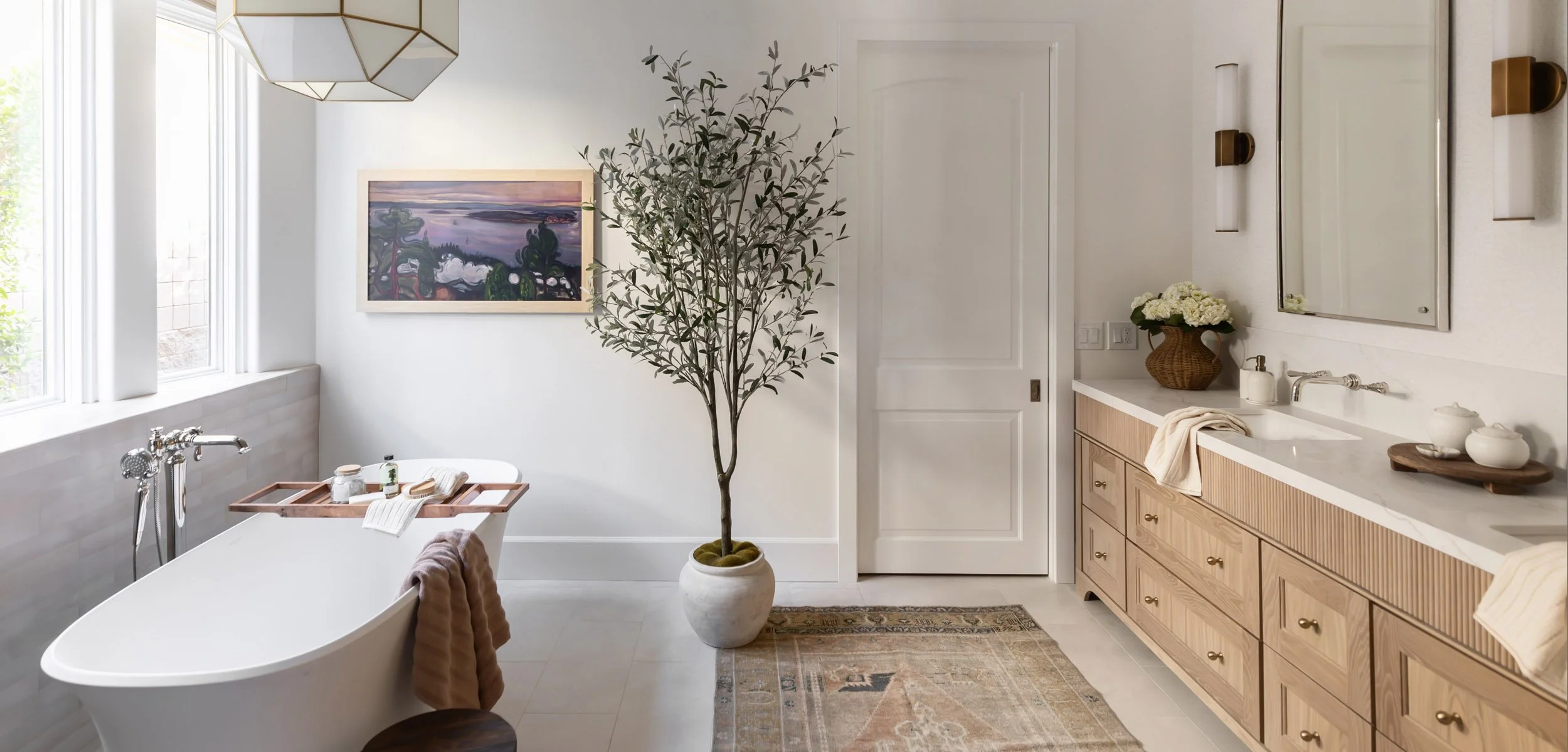
There's a difference between a bathroom that photographs beautifully and one that genuinely changes how you feel at the start and end of every day.
The first is about aesthetics. The second is about intention.
When a Minnesota couple came to me to redesign the primary bathroom in their Scottsdale winter home, they knew exactly what they wanted, even if they couldn't quite articulate it yet. They wanted their bathroom to feel like a calm and welcoming place to start and finish their days. Not a showroom. Not a statement. A retreat.
That project (recently featured in Houzz Magazine) became one of my favorite examples of what a truly well-designed primary bathroom can do. Not because it's flashy — it isn't — but because every single decision was made in service of how it would feel to be in it.
Here's what I've learned from that project, and from years of designing bathrooms for clients across Scottsdale and Paradise Valley.
01 / Start with how you want it to feel, not what you want it to look like
Most people come to a bathroom renovation with a Pinterest board, which is a wonderful starting point. But images only take you so far.
What matters more is what you want the room to do for you. For this couple, that answer was clear: calm, welcoming, a place to decompress after a long day and ease into a new one. Everything that followed — the warm neutral palette, the freestanding tub, the decision to remove a bulky linen closet to create breathing room — came from that single, simple intention.
When the feeling is clear, the design decisions tend to follow naturally.

02 / Breathing room is a design element
One of the most impactful changes in this bathroom wasn't something we added. It was something we removed.
The original layout had two separate vanities on opposite walls, a large built-in tub surround, and a linen closet the homeowners had never loved. It wasn't bad, exactly. But it felt heavy. Crowded. The opposite of relaxing.
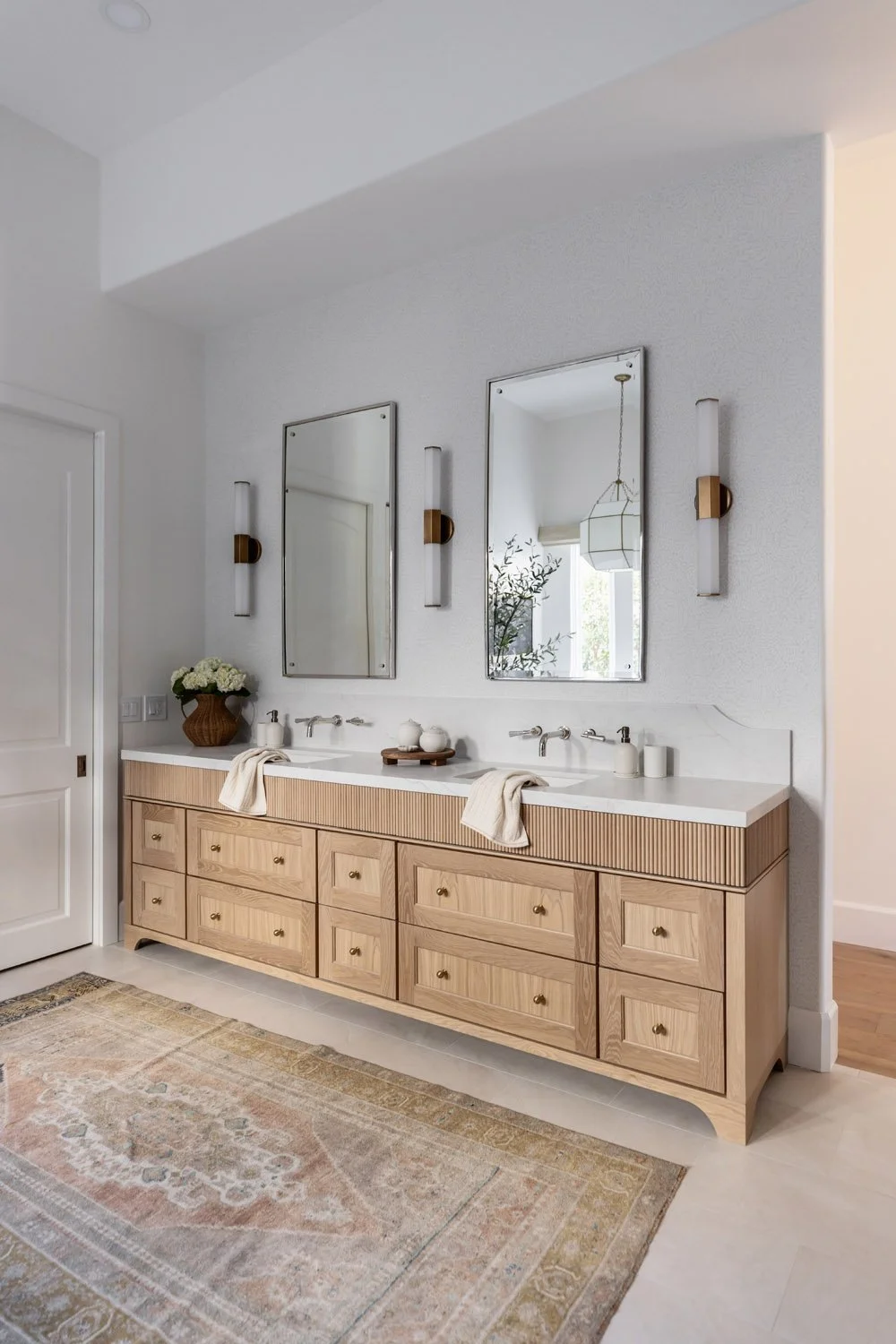
By removing the tub surround and replacing it with a freestanding tub, and consolidating the two vanities into one long double vanity, we created space for the room to breathe. That open area between the tub and the vanity, filled with a beautiful Turkish rug, is now one of the most visually striking parts of the room.
In primary bathrooms, what you take out matters as much as what you put in.
03 / Warm neutrals outperform stark white every time
There's a common misconception that spa bathrooms are supposed to be white. Crisp. Minimal. And while that works for some styles, it often produces a bathroom that feels cold rather than calm, especially in Arizona, where the light is so strong and warm.
For this project, we built the entire palette around warm, layered neutrals. The large-format porcelain floor tile has a subtle marble-like veining. The wall tile behind the bathtub has a handmade zellige look, slightly irregular and beautifully tactile, and picks up the soft tones in the floor. Even the wall color, Simply White by Benjamin Moore, reads warm rather than stark in this context.
The effect is a room that feels bright but not cold. Neutral but not flat. It's the difference between a hospital and a hotel.

04 / Don't underestimate the statement piece
In a room built on restraint, one intentional focal point does a lot of work.
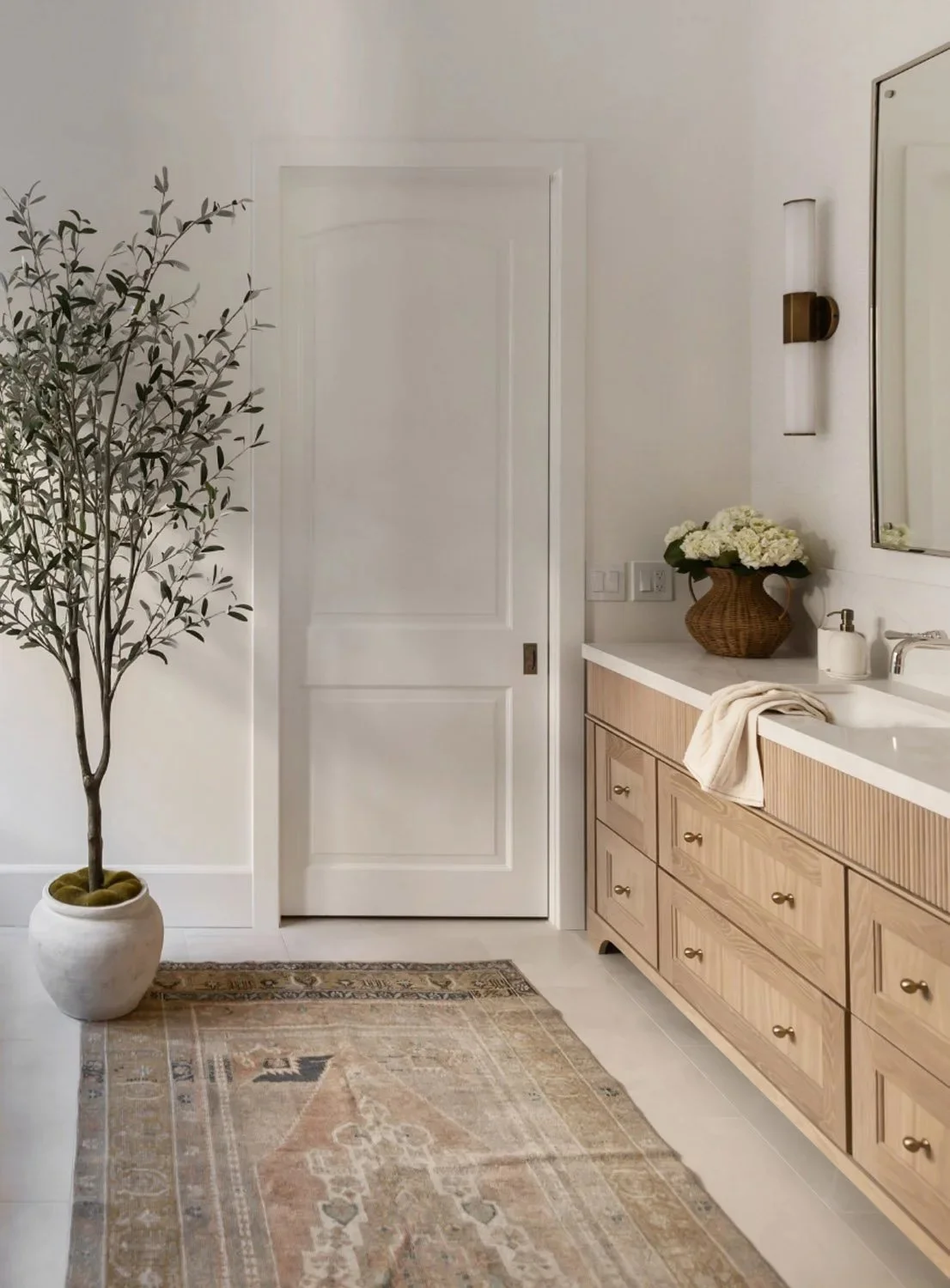
Here, it was the Turkish rug. When everything around it is quiet and neutral, the rug becomes the personality of the room, the element that makes it feel lived-in, collected, and warm rather than sterile. "We needed a statement piece because everything is so neutral in here," I told Houzz. "We wanted to fill the large space between the tub and the vanity with something that was beautiful."
It doesn't have to be a rug. It could be a piece of art, a pendant light, an unexpected tile choice in the shower. But every spa-worthy bathroom benefits from at least one thing that surprises you and tells you someone made intentional choices here.
5. Mix your metals (thoughtfully)
This is one of my favorite design moves, and one that surprises a lot of clients when I first propose it.
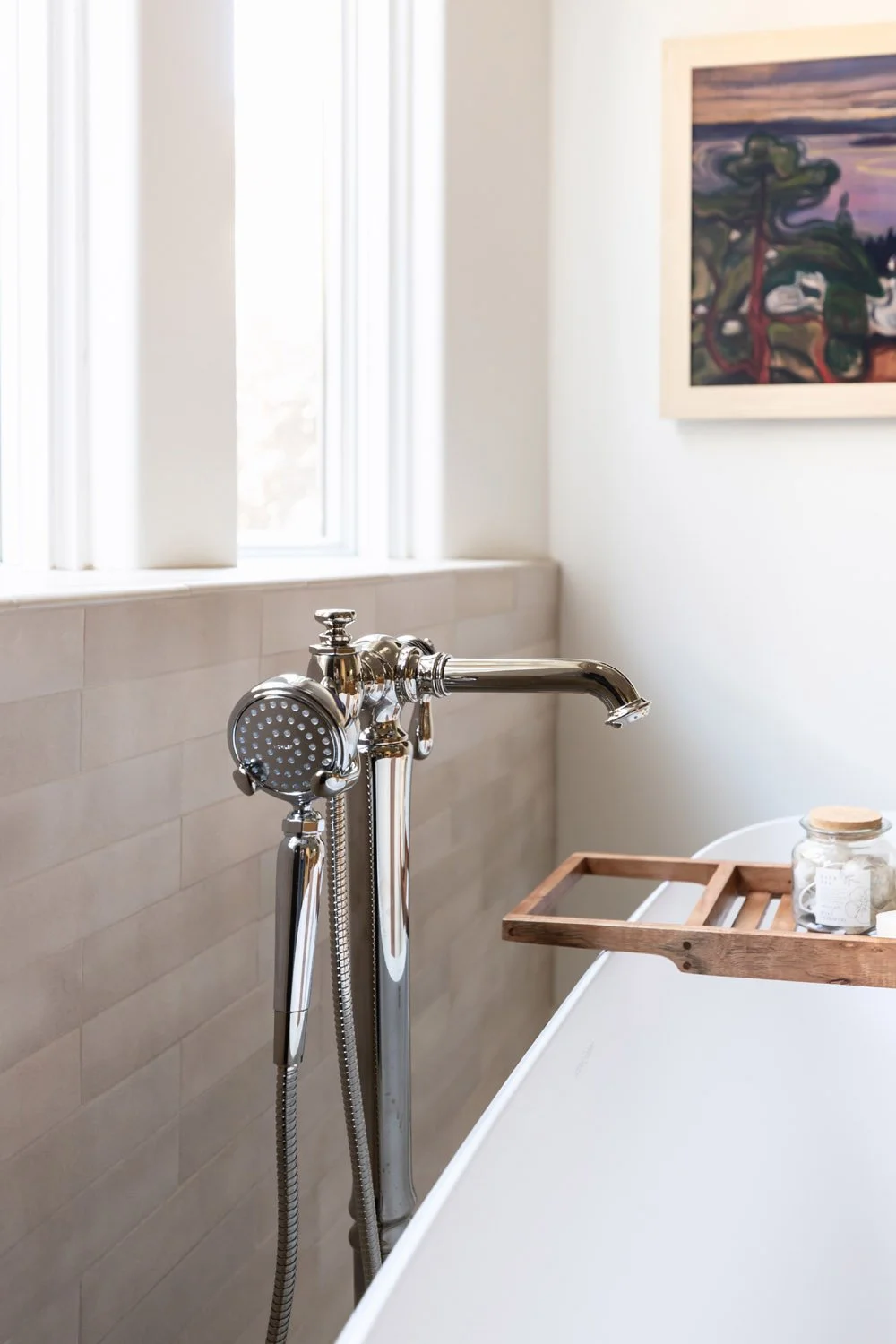
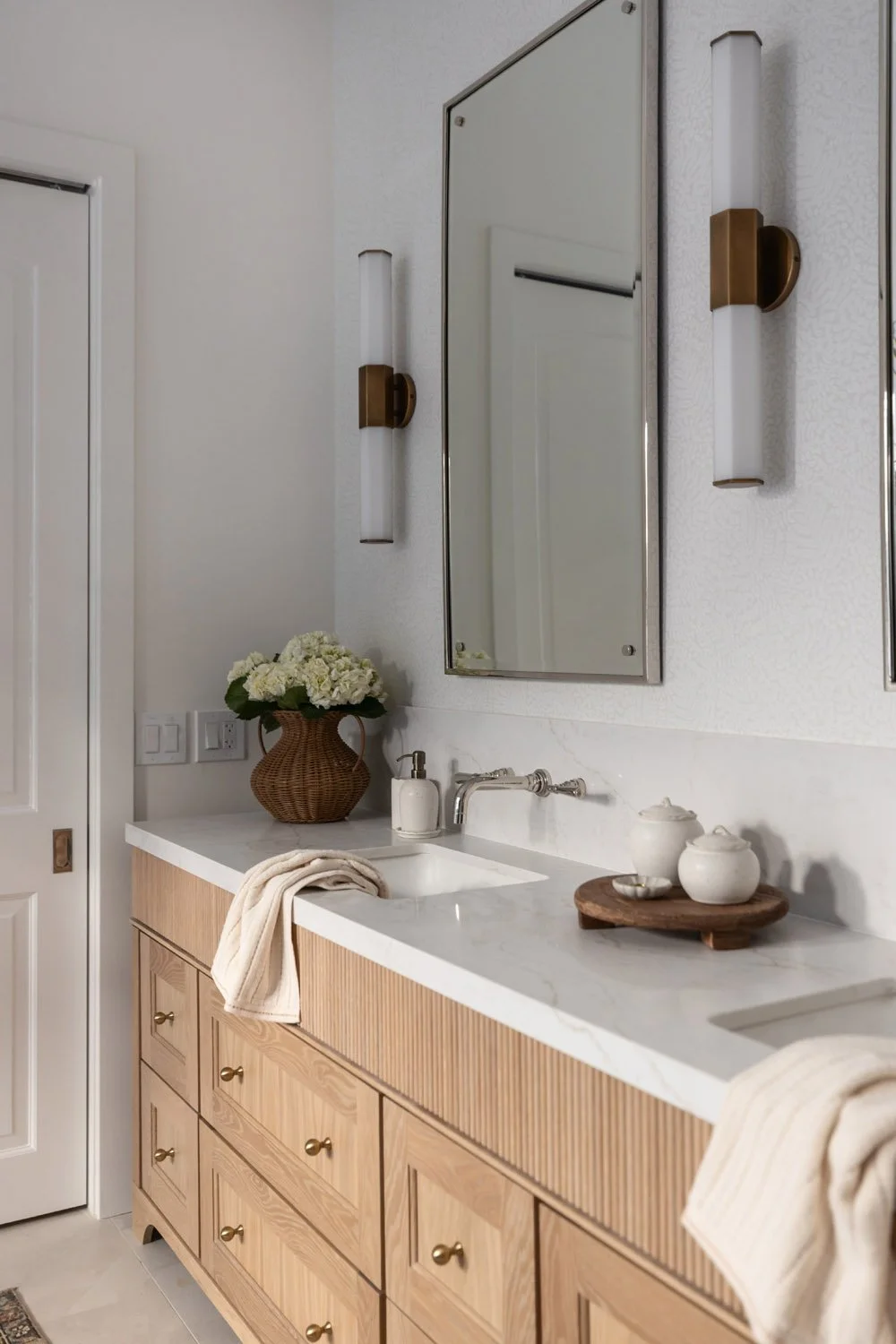
In this bathroom, we mixed polished nickel and aged brass throughout. The result is a space that feels warm, layered, and genuinely interesting rather than matchy and predictable.
The key is balance and repetition. "If you put a metal in one place, you need to put it somewhere else," I always say. "I like to make all the plumbing fixtures the same. If the hardware is different from the plumbing, the lighting can tie it all together."
A single metal finish can feel flat. Two metals, used with intention, feel considered.


06 / The details that look like furniture make all the difference
What separates a beautiful bathroom from a truly special one is often in the details you don't immediately register but always feel.
In this project, we gave the vanity graceful furniture-style feet and a softly rounded corner backsplash. A fluted detail along the top conceals hidden touch-latch charging drawers. The mirrors are clean-lined; the sconces are long and hexagonal, echoing the geometry of the pendant above the tub.
None of these are expensive flourishes. But together, they're the reason the room feels European and refined rather than builder-grade.
The goal is always a bathroom that looks like it was designed, not assembled.

07 / Think about the experience, not just the aesthetics
The best design decisions in a bathroom are the ones you don't notice until you're living with them, and then you can't imagine not having them.
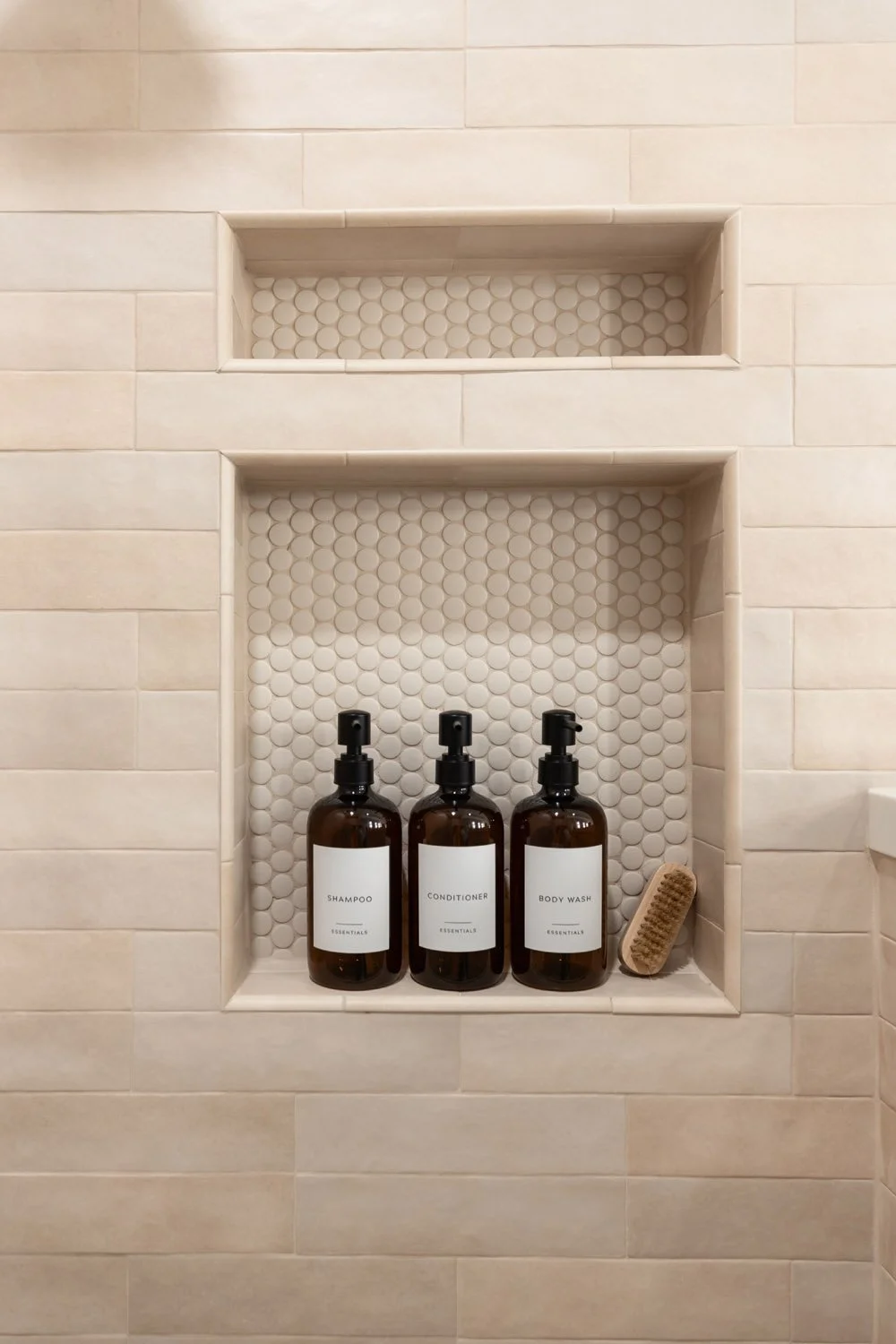
In the shower we designed for this project, we positioned the control valves so the homeowners can turn the water on without getting wet first. There are shower heads on both sides, a bench, and a handheld wand. The penny round tile on the shower floor continues into the niches. The quartz on the bench seat matches the countertop, so the whole room reads as cohesive.
These are functional decisions as much as aesthetic ones. A primary bathroom that truly feels like a spa isn't just beautiful to look at. It's seamless to use.

The result: a room that changes how you start and end every day
When this project was complete, the bathroom was bright but not too white, filled with warm neutrals that invite the homeowners into a soothing retreat for fresh morning starts and calm endings to their days.
That's the goal. Not a bathroom that photographs well (though it did; it was featured as Houzz's Bathroom of the Week). A bathroom that quietly, reliably makes daily life feel a little more beautiful.
If your primary bathroom isn't doing that for you — if it still has the builder-grade fixtures, the heavy Tuscan tile, the layout that's never quite worked — it might be time to think about what it could feel like instead.
Ready to reimagine your primary bathroom? Get in touch and tell us what you're dreaming of.
Project credits: Photography by Stephanie Studer of LifeCreated. This project was featured as Bathroom of the Week on Houzz, November 2025.